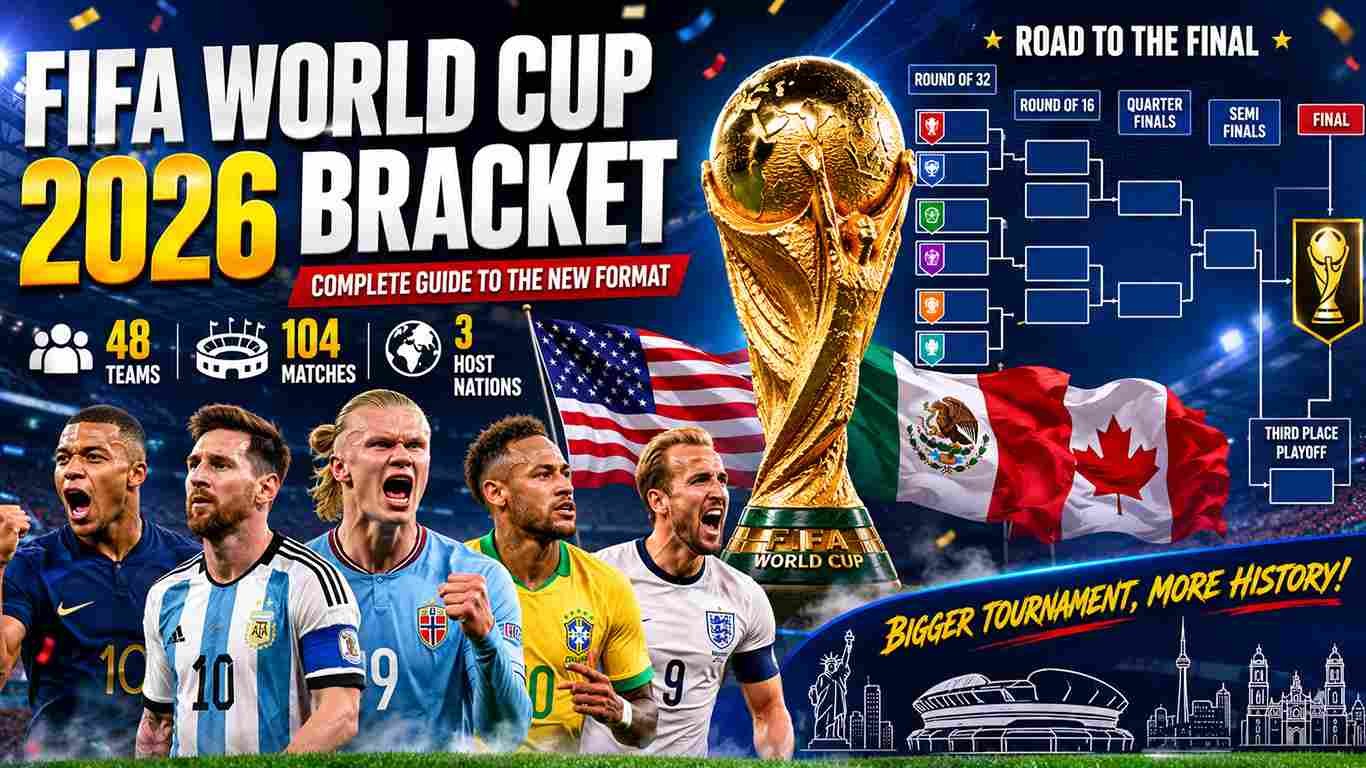
TINTA INFORMASI SPORTS – The FIFA World Cup 2026 bracket will introduce football fans to the biggest tournament format in FIFA history. For the first time, 48 national teams will compete for the world’s most prestigious football title, creating a larger knockout bracket, more matches, and greater opportunities for emerging football nations.
Hosted jointly by the United States, Canada, and Mexico, the 2026 FIFA World Cup represents a historic milestone. Whether you are a casual viewer or a dedicated football supporter, understanding how the tournament bracket works will help you follow every stage of the competition, from the group phase to the championship final.
What Is the FIFA World Cup 2026 Bracket?
The FIFA World Cup 2026 bracket refers to the tournament’s elimination pathway that determines how teams advance after the group stage. Unlike previous editions featuring 32 teams, the expanded competition introduces a Round of 32 before progressing to the Round of 16, quarterfinals, semifinals, and the final.
The tournament structure includes:
- 48 qualified national teams
- 12 groups of four teams
- Three group-stage matches for every team
- The top two teams from each group advancing automatically
- The eight best third-place teams also qualifying
- A 32-team knockout stage
This format increases competitive opportunities while ensuring every group-stage match remains meaningful.
Why FIFA Expanded the Tournament
FIFA expanded the World Cup to make the tournament more inclusive and globally representative.
Several football regions have experienced rapid development over the past decade. By increasing the number of participating nations, FIFA allows more countries to compete on the world’s biggest stage while encouraging football growth across every continent.
The expansion also delivers:
- More international matchups
- Increased global fan engagement
- Greater commercial opportunities
- Additional hosting benefits for participating countries
For supporters, the biggest advantage is simple: more World Cup football.
How the Knockout Stage Works
After the group stage concludes, the tournament shifts into a single-elimination format where every match determines survival.
Round of 32
The Round of 32 appears for the first time in World Cup history.
Qualified teams enter the bracket based on their group standings. Group winners generally receive more favorable matchups, while runners-up and the best third-place teams compete against higher-ranked opponents.
Any drawn match after regulation proceeds to extra time, followed by a penalty shootout if necessary.
Round of 16
The remaining teams continue into one of the most competitive phases of the tournament.
Historically, this stage often produces dramatic upsets as underdogs gain confidence after surviving the group phase.
Quarterfinals
Only eight nations remain.
Managers place greater emphasis on tactical discipline, defensive organization, and squad depth because one mistake can end a championship dream.
Semifinals
The semifinal winners advance to the World Cup Final, while the losing teams compete in the third-place playoff.
Final
The championship match determines the next FIFA World Cup winner and crowns the best national team in international football.
Key Changes Compared with Previous World Cups
The 2026 edition differs significantly from earlier tournaments.
More Teams
The competition expands from 32 to 48 teams, making it the largest FIFA World Cup ever organized.
More Matches
The total number of games increases from 64 to 104, providing fans with nearly six weeks of continuous football.
Greater Competitive Balance
The expanded qualification system offers emerging football nations a realistic opportunity to reach the knockout rounds.
Countries from Africa, Asia, CONCACAF, and Oceania are expected to secure more qualification places than in previous tournaments.
Teams Most Likely to Reach the Later Rounds
Although every World Cup delivers surprises, several nations consistently perform at the highest level.
Traditional contenders include:
- Argentina
- France
- Brazil
- Spain
- England
- Germany
- Portugal
- Netherlands
Meanwhile, countries such as Morocco, Japan, South Korea, the United States, Mexico, and Senegal have demonstrated significant progress in recent international competitions.
The expanded bracket could create more opportunities for these teams to make historic runs.
Factors That Could Influence the Bracket
Several variables may determine how the tournament unfolds.
Squad Depth
With more matches than ever before, coaches must rotate players wisely to maintain fitness throughout the tournament.
Injuries
A single injury to a star player can reshape an entire section of the bracket.
Home Support
Canada, Mexico, and the United States may benefit from familiar conditions and strong local fan support.
Tactical Flexibility
Modern international football rewards teams capable of adapting to different opponents. Coaches who can change formations effectively often gain an advantage during knockout football.
Tips for Following the FIFA World Cup 2026
To better understand the tournament, keep these points in mind:
Follow Group Standings Daily
Group rankings change after every matchday, making each result important.
Watch the Best Third-Place Race
Eight third-place teams qualify, so goal difference and goals scored may become decisive.
Monitor Injury Reports
Player availability often influences betting markets, predictions, and match outcomes.
Keep Track of the Bracket
As teams advance, the knockout pathway becomes clearer, allowing fans to anticipate potential blockbuster matchups before they happen.
Frequently Asked Questions
How many teams are in the FIFA World Cup 2026?
The tournament features 48 national teams, the largest field in World Cup history.
How many matches will be played?
A total of 104 matches will take place across the three host countries.
Will there be a Round of 32?
Yes. The expanded format introduces a Round of 32 before the traditional Round of 16.
Which countries are hosting the tournament?
The 2026 FIFA World Cup will be hosted by the United States, Canada, and Mexico.
The FIFA World Cup 2026 bracket marks a new chapter in international football. With 48 participating nations, a 32-team knockout stage, and a record 104 matches, the tournament promises more excitement, greater global representation, and countless unforgettable moments.
Whether you want to predict the champion, follow your favorite national team, or simply understand how the competition progresses, learning the FIFA World Cup 2026 bracket gives you a clearer picture of the road to football’s biggest prize. (NdH)